Thursday, November 24, 2016

Wednesday, November 23, 2016
Tuesday, November 22, 2016
How Do Wars Help The Economy?
How Do Wars Help The Economy?


Following the Great Depression in The United States the economy also boomed while preparing and fighting in WWII. The New Deal implemented by FDR was a large reason why the U.S's economy actually prospered during war time affairs. According to Economic Progression of the U.S during WWII the U.S government imposed a General Maximum Price Regulation, this disabled the federal government from inflating the economy over 3.5%, which was the average inflation rate from 1942 through 1946. Following the war in 1946 the inflation rates soared to 10.3 percent. Also many private sector industries were converted into war time companies which then strengthened the military, such as the "conversion" of some of the automobile industry transitioning into aircraft industries. During this time of war the government did federally tax 43 million people which was previously at 4 million people, this was a very intelligent choice by the government because it increased the tax revenue from 8.7 billion dollars to 45 billion dollars. This wasn't detrimental for the taxpayer either due to the fact that employment during the war was steadily increasing. The economy was thriving while increasing the gross national production from 88.6 billion dollars in 1939 to a 135 billion dollars in 1944. The war unified the nation, while providing more jobs which then fostered and progressed the United States' economy throughout the war.


cen.acs.org

Even though wars can be very detrimental to the economy of some countries, history has showed that wars can actually benefit the economy of a country. The enhancement of the economy through war usually has had the same pattern when it is successful. Countries that benefited from war tended to involve a mass majority of citizens within that country being employed, while having the production and revenue of the work directed toward the government. Then the income and production of the workers is then funneled back to the nation which then gives people a steady income, a secure job, and more spending power, all of these things helped these following economies massively. Although the next to countries actually fought against each other during WWII, their economic tactics towards war barely differed.
Before and during WWII Nazi Germany used war as a way to lift people out of unemployment and poverty by providing the citizens with jobs which benefited the common man while strengthening their nation immensely. According to Nazi Germany's Economic Boom in 1933 the unemployment population was at a staggering 6 million people, but by 1939 the unemployment population was at 300,000. During that time span thousands of jobs were created which provided the 1.4 million strong army with all things necessary for war. So the stronger the military became, the more jobs were demanded to support and supply the steadily growing military which then provided more people with jobs while enhancing the military's power. Although strikes were outlawed by the government, the jobs they provided for factory workers earned 10 times more than the dole payment that the government distributed towards the unemployed. This massive differential in salary would incentivize more people to work, which then helped the government in it's war expenditures while enhancing the economy.
Following the Great Depression in The United States the economy also boomed while preparing and fighting in WWII. The New Deal implemented by FDR was a large reason why the U.S's economy actually prospered during war time affairs. According to Economic Progression of the U.S during WWII the U.S government imposed a General Maximum Price Regulation, this disabled the federal government from inflating the economy over 3.5%, which was the average inflation rate from 1942 through 1946. Following the war in 1946 the inflation rates soared to 10.3 percent. Also many private sector industries were converted into war time companies which then strengthened the military, such as the "conversion" of some of the automobile industry transitioning into aircraft industries. During this time of war the government did federally tax 43 million people which was previously at 4 million people, this was a very intelligent choice by the government because it increased the tax revenue from 8.7 billion dollars to 45 billion dollars. This wasn't detrimental for the taxpayer either due to the fact that employment during the war was steadily increasing. The economy was thriving while increasing the gross national production from 88.6 billion dollars in 1939 to a 135 billion dollars in 1944. The war unified the nation, while providing more jobs which then fostered and progressed the United States' economy throughout the war.


Wednesday, November 16, 2016
Social Media Marketing
 |
| www.martechadvisor.com |
“The average person has five social media accounts and spends around 1 hour and 40 minutes browsing these networks every day, accounting for 28pc of the total time spent on the internet.” With this many people in our society using social media , it would would be naive for a marketer to not want to sell or advertise products via social media. Just like any other marketing schemes, there are many psychological aspects that go into social media marketing.
Social media is the perfect place to spread your brand name and share your products to more customers. There are many different tactics marketers could use. One of them is the reciprocity tactic on your social channels. “This means to take a closer look at your audience to better understand what they like and expect. Figure out what compels them to engage and come up with an offer that they’re likely to share with friends.” One ways you can go at this is to Identify what kind of influencers your target audience idolizes. This strategy allows your company to gain trust and connect with your audience even more. Trust is an important factor in influencing conversions and engagement.So how should you gain trust with your audicence? Start by associating with people or brands that your target audience already trusts. By doing this your company builds relationships with influencers who can give your brand more credibility. Connecting with your audience is one of the simplest ways to have your audience engage with your company or products. This neuromarketing tactic makes use of the emotional reaction that’s triggered when people feel connected to you. When people feel close to you and can relate to you, there’s a great chance they’ll engage with your company. Also, by using an influencer that your audience follow, they'll want follow what they're doing and potentially purchase the product that is being advertised. This indirectly relates to the study of psychology by having your audience try to “fit in”. By buying the product being advertised by an influencer, they'll feel a sense of belonging.
There are other simple approaches marketers could use for social media marketing. One way is to engage in everyday emotions such as laughter. “Laughter is one of the most effective tools for forming a strong emotional bond with people. Like Chipotle does , you can use wit and humor to connect with your Twitter followers. The Mexican grill has a deep understanding of their target audience and the kind of humor they’ll likely appreciate. This helps them avoid using humor that their followers might find offensive or lame.” Also, by using a positive/meaningful ad associated with your product, like chipotle. This builds a better connection with your audience and really leaves a mark with their remembrance of the product. Most of the mainstream social media sites offer a “sharing or liking” system. For example, If a product such as downey uses a cute baby in their ad appealing to many viewers, this can potentially get shared all around, connecting to more and more of an audience. When a customer is in need of a detergent, they can recall how cute of an ad Downey and direct their purchase to their products. A comedic approach is just one of many emotions a company can use to better their social media marketing.
Are there safer economic alternatives than war?
There are more safer financial alternatives than the high expense costs of war and the purchasing of weapons, other ways of combating a country can be achieved. Diplomatic agreements that affect a country’s economy can be imposed, they are called sanctions or embargoes. Embargoes are when a country cuts of all forms of trade, sometimes other countries join in on the embargo which then limits a country from attaining key resources and income due to the loss of trading partners within the international community. When pushing for political change within a country by outside countries, they will sometime impose sanctions or embargoes. These cheaper and more diplomatic forms of warfare have been successful in many cases.
Libya endured sanctions that nearly destroyed their oil incomes Countries that are under embargoes , also instead of a war with Cuba during the cold war the U.S imposed a trade embargo on them which resulted in many companies avoiding trade with Cuba because if they were to participate in trade with them, the U.S would refuse to trade with them as well. When our political goals are achieved we can then lift these economic trade sanctions, we can lift the sanctions which can sometimes incentivize countries to change because their trade with others is their only source of income.
In 1973 Saudi Arabia imposed a ban on oil trade with the U.S which ended up being very detrimental to the citizens and the economy of the U.S History of Embargoes. Instead of fighting wars and buying weapons, the more intelligent economic decision for our foreign policy should be to impose more sanctions and embargoes.
Libya endured sanctions that nearly destroyed their oil incomes Countries that are under embargoes , also instead of a war with Cuba during the cold war the U.S imposed a trade embargo on them which resulted in many companies avoiding trade with Cuba because if they were to participate in trade with them, the U.S would refuse to trade with them as well. When our political goals are achieved we can then lift these economic trade sanctions, we can lift the sanctions which can sometimes incentivize countries to change because their trade with others is their only source of income.
In 1973 Saudi Arabia imposed a ban on oil trade with the U.S which ended up being very detrimental to the citizens and the economy of the U.S History of Embargoes. Instead of fighting wars and buying weapons, the more intelligent economic decision for our foreign policy should be to impose more sanctions and embargoes.
Monday, November 14, 2016
what to development tour players receive in trade for their low pay
 |
| www.sltrib.com |
Why do kids go to school for six hours a day when they aren’t getting paid? Why do we go out and buy food instead of just making it ourselves? There has to be some benefit in the decisions we make, or we just wouldn’t make them. For example, getting a well paying job in the future, or not having to cook. The same principle applies to web.com tour players. These players are payed a fraction of what PGA Tour players make, but they still devote their lives to the cause because the web.com tour gives them the opportunity to play their way into their future. A chance to earn a spot on the PGA Tour and make the big bucks. A chance, is all it takes for these players to give up millions of dollars per win. An article from Golf Digest, a source that has been reliable in the golf world for years, will help me in my argument.
There are all sorts of different kinds of players on the Web.com tour. Some that have been there for years trying to take it to the next level, and some just out of college that are just using it to get to the next level as quick as possible. But that’s just the one thing they all have in common: the goal of reaching the PGA Tour. Just the opportunity of being able to achieve such a title is the sole reason that these hundreds of players travel across the country every week, spending thousands of dollars to play in the tournaments. Smylie Kaufman is one of them, who’s coming off his first year on the PGA Tour during the 2015-16 season. In an interview he was asked how the web.com tour helped him get to where he was, and he responded, “The main thing was trying to figure out a routine. Monday through Wednesday, managing your body. Practice rounds and travel. Things you wouldn't know as a rookie on the PGA Tour unless you have an entire year of travel under your belt. For me, that's exactly what the Web.com Tour did for me. So far on tour, I'm not doing anything different than what I did last year. I'm trying to keep the same routine, that way I can continue the success I had last year.”
For everyone it’s different. Some use it as a long term place to grow their game to evolve into a PGA Tour caliber player, and some use it as a short term guide to get a glimpse of what they know they’ll be seeing in the near future. But all of the web.com tour players used the tour as their way to the PGA Tour. Traveling around the country for prizes that weren’t all that great, because they knew the wins meant more than just the money, they meant their future as well.
Difference in value of skill between the PGA Tour and development tours
“Golf is the closest game to the game we call life. You get bad breaks from good shots; you get good breaks from bad shots - but you have to play the ball where it lies.” -Bobby Jones
 |
| www.pgatour.com |
This quote is one of my all time favorites, mostly because of how true it really is. Especially when talking about the grey area between the Web.com Tour and the PGA Tour, where futures can be born or wiped away in the matter of a few strokes. In the end, golf is about never giving up. Just like life, when you’re down and feel like you have nowhere left to go, there always might be something mir aculous waiting for you just ahead, so you have to just keep trucking along. Nicholas Lindheim and Kyle Thompson have both experienced opposite sides of this truth, and both greatly prove my argument that skill is a much bigger factor on development tours than is is on the PGA Tour. Articles from the PGA Tour itself, who is always a reliable source when it comes to its own players, and Greenville, who has established itself as a very credible source for all news, will aid me in my argument.
aculous waiting for you just ahead, so you have to just keep trucking along. Nicholas Lindheim and Kyle Thompson have both experienced opposite sides of this truth, and both greatly prove my argument that skill is a much bigger factor on development tours than is is on the PGA Tour. Articles from the PGA Tour itself, who is always a reliable source when it comes to its own players, and Greenville, who has established itself as a very credible source for all news, will aid me in my argument.
I watch golf on T.V more than the average person. Most likely because I genuinely enjoy watching it. I can see how some might think it’s extremely boring, but for me, I could sit on the couch and watch golf for hours. That being said, I can personally vouch for the fact that it looks like every one of the golfers on T.V, both on the PGA and Web.com tours, are filthy rich, and I find myself aspiring to be them everytime I sit down and watch golf. While this may be true for a lot of players on the PGA Tour, it most certainly isn’t the case for hundreds of players, more commonly on the development tours, the most popular being the Web.com tour. There are players that are playing tournaments weekly just to get by and move on to the next one, just grinding it out, waiting for that one week that they might win that will propel them onto the big stage, the PGA Tour, where they don’t have to worry about their professional status, as they are guaranteed at least a full year on tour.
Two great examples of this sort of situation are Kyle Thompson and Nicholas Lindheim. Kyle, an 11-year veteran on the Web.com tour, has had a career of ups and downs, never securing a long term spot on the PGA Tour. He’s been struggling as of late, and hurricane Matthew caused the cancellation of the web.com Tour Championship, which would have been Thompson’s last chance to earn a spot on the PGA Tour in 2017. As a result, he’s had to contemplate giving up professional golf. “I’d be the first guy ever to leave behind full status on the web.com Tour,” said the 37-year-old Easley native. “I’ve been doing this for a while. I’m kind of over the web.com Tour. It’s just harder and harder to make it,” Thompson said. “The money is down. The web.com Tour has struggled. The opposition gets better and better. It’s not the same animal as when I started.” The cost of traveling to every event each week has become harder for Thompson over the years, because the events are farther away from each other. And as the distance has increased, so have the travel costs, and so has the competition. All of these factors have caused a player with almost $2 Million in career earnings to have to decide whether or not to hang it up.
On the other side of the spectrum, there’s Nicholas Lindheim. Nicholas didn’t go to college, instead getting a job at a golf course where he fueled his passion for the game everyday after work, first attempting to qualify for the PGA Tour in 2011. After mixed success, and some wins in Latin America which got him status on the web.com, Lindheim was tired of trying. It had been 5 years of work that seemed like it was going nowhere. "I thought maybe at one point this year I wasn't good enough," Lindheim said. "It was my daughter's third birthday. I was in Springfield, Illinois, and had just missed the cut by a shot. I missed an 8-footer on the last hole. I called my wife and said, `This isn't fun.' I was missing out on life at home." But his wife convinced him to finish out the year and re-evaluate then. That next week, he won in Utah and secured his spot on the PGA Tour. "That's how crazy this game is," Lindheim said. It’s a story that explains just why web.com tour players go through what they do, which leads me into my next topic of what do development tour players receive in trade for getting paid a fraction of what PGA Tour players make.
Two great examples of this sort of situation are Kyle Thompson and Nicholas Lindheim. Kyle, an 11-year veteran on the Web.com tour, has had a career of ups and downs, never securing a long term spot on the PGA Tour. He’s been struggling as of late, and hurricane Matthew caused the cancellation of the web.com Tour Championship, which would have been Thompson’s last chance to earn a spot on the PGA Tour in 2017. As a result, he’s had to contemplate giving up professional golf. “I’d be the first guy ever to leave behind full status on the web.com Tour,” said the 37-year-old Easley native. “I’ve been doing this for a while. I’m kind of over the web.com Tour. It’s just harder and harder to make it,” Thompson said. “The money is down. The web.com Tour has struggled. The opposition gets better and better. It’s not the same animal as when I started.” The cost of traveling to every event each week has become harder for Thompson over the years, because the events are farther away from each other. And as the distance has increased, so have the travel costs, and so has the competition. All of these factors have caused a player with almost $2 Million in career earnings to have to decide whether or not to hang it up.
On the other side of the spectrum, there’s Nicholas Lindheim. Nicholas didn’t go to college, instead getting a job at a golf course where he fueled his passion for the game everyday after work, first attempting to qualify for the PGA Tour in 2011. After mixed success, and some wins in Latin America which got him status on the web.com, Lindheim was tired of trying. It had been 5 years of work that seemed like it was going nowhere. "I thought maybe at one point this year I wasn't good enough," Lindheim said. "It was my daughter's third birthday. I was in Springfield, Illinois, and had just missed the cut by a shot. I missed an 8-footer on the last hole. I called my wife and said, `This isn't fun.' I was missing out on life at home." But his wife convinced him to finish out the year and re-evaluate then. That next week, he won in Utah and secured his spot on the PGA Tour. "That's how crazy this game is," Lindheim said. It’s a story that explains just why web.com tour players go through what they do, which leads me into my next topic of what do development tour players receive in trade for getting paid a fraction of what PGA Tour players make.
Sunday, November 13, 2016
What Makes You Guilty After A Purchase?
 |
| Source: http://fi.deluxe.com |
Imagine yourself standing in a train field full of employees doing maintenance on the line. Now imagine you see a train coming rapidly at the tracks, now if you were to do nothing, it would end up killing 5 innocent workers. But, if you were to flip a nearby switch, it would change the track so that only 3 workers would be killed. Now the logical person would say you flip the switch and more lives would be safe. The problem with this no matter whether you pick to flip the switch or you stand idly by, you will always have this sense of regret with the choice you made, and whether it would have been better to choose the other option. This is the basic idea of the concept of “The Paradox of Choice”, a term coined by Barry Schwartz in his book of the same name.
The basics of this idea were talked about in the research journal named Judgement under Uncertainty: Heuristics and Bias, which gives an overview of this idea of not knowing whether the choice you made was correct. This idea connects to the idea of technology because of the recent problem of too many choices, which is also talked about in Barry Schwartz’s TED Talk on this topic. He states that the problem that this creates is that no one knows whether they picked the right option because we want whatever gives us the most utility, but because of how many choices we have, you never know if you picked the best option.
These two forms of documentation link back to this idea of uncertainty, that we never know which of our opportunity costs will lead to our best case scenario and give us the best life. A real life example of this could be seen in computers or more specifically, laptops. If you knew you wanted a computer that ran windows and was a laptop, on Amazon you get a list of nearly 14,000 different devices. This much choice is helpful because that means that there is some laptop that will be perfect for you, but it also means there is more anxiety to the choice because it would feel like finding a needle in a haystack.
All in all, the concept of the “Paradox of Choice” is something that exists out of the nature of what humans want, because we want to get that most utility out of our choices so that we feel better about it. But because of want to get the perfect thing, we have in turn given too many options to the people that makes it harder for someone to feel happy about their purchase.
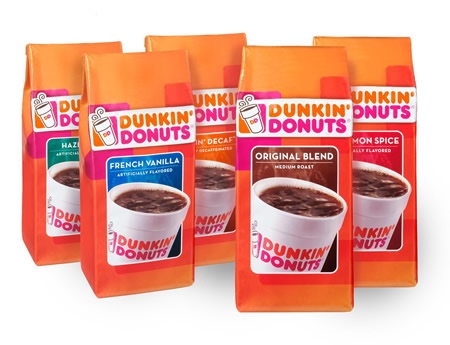
How do coffee corporations allow for consumers to bring the coffee brand home with them?
Source: coffeedetective.com
Being able to have your favorite brand of coffee without having to leave your house has been a way businesses increase their profits. ABC News article shares how Dunkin’ Donuts has recently expanded their sales of packaged coffee in grocery stores nation wide in hopes to maximize their profits. This will give customers incentives to buy their coffee brand at the store because there will be more coffee in a package for a cheaper price than there would at the coffee shop. Coffee corporations sell their brand coffee and other items in order to give their customers incentives of having their favorite coffee at home.
This year Dunkin’ Donuts plans to expand their packed coffee nation wide. ABC News claims that Dunkin' and P&G say they've lined up 40,000 grocery and other retail stores nationwide to launch their packaged coffee. Twelve-ounce packages will be offered at a suggested price of $7.99, with 40-ounce bags going for about $16 each in retail warehouse clubs. These packages will be sold by the likes of Wal-Mart, Kroger and CVS in a bid to get customers to brew the brand at home, not just pick it up at Dunkin' outlets. The plan is expected to triple U.S. stores to 15,000 by 2020. Robert Rodriguez, Dunkin’s Brand president says that "if you're going to be accessible, you have to be in both places." Dunkin first established their coffee brand in grocery stores in 2002 and they thus have become one of the biggest corporations today. Having the access to their coffee from home only maximises the profits. Dunkin also offers a Dunkin at home website where customers can visit that shows them nearby stores where their coffee is sold.
Along with Dunkin’, Starbucks sells their coffee in stores nation wide, but their most recent trend is the cold brew coffee. Starbucks has recently brought cold brew coffee to U.S. grocery and convenience stores on a bet that the slow-steeped drink beloved by coffee connoisseurs can have broader appeal. With the popularity of iced coffee increasing, cold brewed coffee is the next best thing. Cold brew has become trendy in a coffee industry where consumer interest has shown more interested in cold drinks. Starbucks itself has helped popularize that trend, as its cold coffee-based drinks added to the menus over the years have helped sell more beverages during the summer. This competes with the Dunkin’ Donuts ever so popular iced coffee. Along with this, Starbucks offers a coffee at home website where customers can visit to be instructed on how to brew their favorite coffee drinks at home. This site corresponds with the season, so customers can have their favorite holiday drink at home.
Keurig has provided a huge increase in allowing customers to have their favorite coffee at home. With the correct Keurig brewing machine, customers can insert a K-cup with the coffee brew of their choice, and within seconds they have Starbucks or Dunkin’ Donuts coffee at home. In the long run, having the K-cup at home every day is most likely much cheaper than going to the actual coffee shop each morning. Robert Goldin, of the Chicago-based restaurant and retail consulting firm Technomic says that “away from home is where the action is with respect to coffee.”
Future questions: Do coffee corporations show maximization in their products by teaming up with other business's and corporations?
You Have Us

http://www.toptenscentral.com/
The Dana-Farber/Brigham and Women’s Cancer Center has released a video ad, called “You Have Us”, that shows they have state of the art technology to treat cancer. Found on the Dana-Farber Cancer Institute’s website, it has a link to the video they created which features physicians Andetta Hunsaker, MD; Tom Thomas, MD, MPH; Charles Fuchs, MD, MPH; and Craig Bunnell, MD, MPH, MBA. This ad shows that the Dana-Farber Center is a high quality center and their ad motivates people to donate or take part in their research.
In the ad they mention that they have been working endlessly to improve their techniques. In the video they said, “The ability, at Dana-Farber Womens, to actually sequence cancers is going to provide a level of care to patients that we’ve never imagined before”. This compels the audience to think that Dana-Farber is improving and caring for their patients very well which gives them the incentive to seek treatment from this facility. The video also stated that “when we identify lung cancer, it’s about the size of a grain of sand”. This shows that this Center has very effective methods of discovery.
In the ad they also showed doctors in scrubs talking, which brings out the pathos in the audience because they know that the doctors working there are very dedicated to their jobs and want to help people to the best of their abilities. The ad also pictures doctors and scientists looking at labs and results and using new CT scanners, which also shows the audience that this foundation is a place that is working very hard to come up with new ways to detect cancer a lot sooner than we could’ve imagined before.
Cryptocurrency and its Future
 |
| Source:http://www.fintp.org/ |
The top cryptocurrencies are worth much more than any other physical currency in the world. According to a online cryptocurrency news page The first cryptocurrency was Bitcoin which was created by Satoshi Nakamoto, all of the cryptocurrencies that came out after Bitcoin use the system that Nakamoto created. Cryptocurrency is a decentralized online currency that allows people to purchase goods while maintaining a high level of anonymity.
- Cryptocurrency is “a medium of exchange like normal currencies such as USD, but designed for the purpose of exchanging digital information.” There are about 20 different cryptocurrencies that actually have a significant value. Bitcoin remains the most valuable with its current value at $705. The reason Bitcoin is worth so much more than any other cryptocurrency is because it was the first cryptocurrency created and all the other cryptocurrencies are based off of it.
- One of the main reasons people choose to use digital currency is because “unlike centralized banking, like the Federal Reserve System, where governments control the value of a currency like USD through the process of printing fiat money, government has no control over cryptocurrencies as they are fully decentralized.” This means that cryptocurrencies are not affected by inflation or by any specific countries demise like a normal currency would be. This interests potential investors because they think it is easier to predict its future value.
- Basically cryptocurrencies are “electricity converted into lines of code with monetary value. In the simplest of forms, cryptocurrency is digital currency.” Cryptocurrency is similar to normal currency in the sense that there is a limit to the quantity available at any given time. The less there are available the higher the demand thus driving the price up.
- A main difference between cryptocurrencies and normal money is that, “cryptocurrencies are designed to decrease in production over time like Bitcoin, which creates a market cap on them. That’s different from fiat currencies where financial institutions can always create more, hence inflation.” Right now 72% of Bitcoins have already been mined, when the other 28% get mined a Bitcoin is predicted to be worth more than $10,000.
- Certain people are hesitant to invest in cryptocurrencies because they have a reputation of being hacked but, “Cryptography is used to secure the transactions and to control the creation of new coins.” This will prevent future Mt. Gox (a Bitcoin hack in which $400 Million was lost) situations from ever happening again.The limit on the amount of cryptocurrencies being released into the public shoots up their value but if release too much into circulation it has the potential to backfire and actually drop the price due to the excess of cryptocurrency available.
The Future
 |
| http://www.startyourbusinessmag.com |
As everyone know, different decide lead to different result and the future of two of the biggest economy systems, Chinese and American, is decided by many factors. In my opinion, the regulation, taxes and the land ownership is three of the most important factors which I have explain in my previous blog post.
Based on the research, many economist believe the U.S economy have grow to a point that need to re-adjusted in order to keep growing. According to the Article The End of Economic Growth in America from Fortune. Mr. Gordon, a Stanley G. Harris Professor of the Social Sciences at Northwestern University, suggest through “increasing immigration and investing in universal pre kindergarten education” can help U.S promoting faster economic growth. Which is understandable, suppose the economic system of U.S is a lake, everyone is a unit of water. Increasing immigration is getting extra units from outside of the economic system; to investing in universal pre kindergarten education is to increasing the power of each units inside this economic system and both will end up increasing the water inside the lake. However, Mr. Gordon's fundamental observation is that “no matter what we do, economic growth is dependent on technological growth, and we can’t expect an industrial revolution every century as if it were clockwork”. Since the economy system of U.S have fully developed in the past several decades and most of the factor of production have grow to it’s peak and compare to the other, the human capital is the easiest one to increased.
Different to American, economist believe Chinese economic growth have not come to it’s peak yet since it is mostly working on product processing. Based on the China’s future challenge for the world economy, China face a short term challenge that to manage spillovers that might be a sharp slowdown in China’s economic activity. The fast economic growth of China have left many problems untreated and to keep the growth under control became more important. However, as my previous blog post decided, Chinese government have a high control over their economic system and that will not be a big problem in the next few decades. Furthermore, Author have pointed out “how to cope with the integration of a financial powerhouse into the world economy” have became a big problem for the Chinese governor because as the buying force from China increase globally, it became harder to re-adjust the percentage of Secondary industry and percentage of Tertiary Industry. That will lead to a situation that either the economic collapse or reform a new system.
All in all, the future of both economy system will be different as the government’s action and the react from the people.How does Eastern culture influence Western luxury brands?
 |
| source: http://www.independent.co.uk |
Around a decade, Asian countries start to be the new focus of Europe luxury brands. Fashion designers other than Asians became to be innovated by Asian culture and put the elements on their designs. And China drew the most attention of luxury brands. Chinese elements can be found in nearly every designer’s work. The article titled, China’s influence on fashion: at the top of the game both creatively and commercially by Alexander Fury, who is a fashion journalist, author, and critic, was published on the website, Independent. It shows that western designers add Chinese elements to their clothes and stage their fashion shows in Asian countries to gain Asian customer.
China’s influence on fashion: at the top of the game both creatively and commercially by Alexander Fury talks about an exhibition in New York. The theme of the exhibition was China: Through the Looking Glass and it exhibited the Europe Luxury goods influenced by China. Andrew Bolton of the museum’s Costume Institute worked with Wong Kar Wai, a Hong Kong-based film director, to present this exhibition. The clothes there were Western glamorous gowns with Chinese prints, textiles, and jewels. Moreover, the scenes from the films about Chinese history was carried through the show.
 |
| source: http://www.wallpaper.com |
Other than China, Japan is another apple of luxury brands’ eyes. Luxury brands are staging shows in this country. For example, Dior was building its relationship with Japan by staging the pre-fall 2015 show and an exhibition in Tokyo. South Korea is also a rising star. According to the article, “Chanel is staging their latest cruise show in Seoul – because South Korea is a new focus of luxury brand attention, the third largest in Asia after China and Japan and worth about £5.9bn.” The situation is apparent that Asia’s status in fashion business field is moving up since Asians occupy a large part of the customer of these brands.
Future research: How does fashion brands make their collections popular?
Why are owners willing to pay so much for their players?
| www.mensfitness.com |
Recently with the Chicago Cubs World Series victory we have seen the impact that sports can have on the community. Well over half of the school on Thursday, the day following Wednesday night’s World Series victory, was wearing blue or repping the Cubs in some way. The reaction to the first win in 108 years has been all over social media. This reaction has been emotional and many people are still in shock from the fact that the Cubs have finally won. All of these are part of why the owners are willing to pay their players so much. The fans have an emotional connection to the team, and their success has an impact on their daily lives. This dedication to the team by the fans leads to tons of revenue for the owners. Fans are willing to pay this ridiculous $75 for a World Series sweatshirt, because they are passionate for the Cubs. The owners can make absurd amounts of money from all of the merchandise that the fans were purchasing along the ride to the World Series and in celebration of the victory itself. Cubs fans are passionate for the Cubs, this was clear in the fact that over half of Progressive Field in Cleveland was filled with Cubs fans. That leads me to my next point, the tickets. The tickets for the World Series were so expensive in Chicago, in some cases it was cheaper to fly to Cleveland, pay for a hotel, and watch a game there in Cleveland than to just buy a ticket for the game at Wrigley. The sources, SBNBA and Forbes, are reliable, because they are experienced with financials and how they relate to sports. All in all the main reason that the owners are willing to pay so much for the players is because of how much revenue that they earn from the player’s production on the field and the passion of the fans for the players.
Fans are incredibly passionate about their sports teams and this can lead them to paying crazy amounts of money for merchandise or tickets for their team. One of these sources where they are willing to spend large amounts is paying for sports channels that allow them to watch their teams play on television. “ The salary cap jump to $94 million was expected once the $24-billion television deal was signed, but no one immediately foresaw another substantial jump coming the year after. But it's happening, with the 2017-18 cap is set to jump to an estimated $107-110 million range.” This huge TV deal is the due to the increasing popularity of particular leagues and the increase in fan interest. This puts tons of revenue into the pockets of the owners. The owners know that they would not get this revenue without the players, so they are more than willing to give these crazy amounts to all of their players of vary levels of skill from Jay Cutler and his $21 M to Andrew Luck and his $30 M. They get this crazy revenue from the passion of their fan bases, and it makes them willing to spend large sums on their players that increase that passion of their fan bases by being successful, fun to watch, and helping to make their teams a winning product.
There is a contrast to this however. That massive new NBA TV deal was just signed in the US. However the professional basketball league in Spain does not have anywhere near as lucrative of a TV deal. Among other reasons the main reason for this is difference in interest in the sport. In America basketball is one of the big three sports that includes football and baseball as well. In Spain the major sport is soccer and nothing else is really close. They are crazy about their soccer, so the interest in basketball is lower. One might say then why is it that the NBA is so popular here like soccer in Spain, but so is the MLB and NFL. Well that is just simple economic differences between the countries. The US and it's citizens are for the most part extremely well off, especially when compared to other countries. Many Americans have the money to be passionate about multiple sports and follow them all closely. For example many at our school happen to be big Cubs, Bears, Bulls, and Blackhawks fans and have merchandise for all of those teams. Most Spaniards simply do not have the money to do that, because they are not as well off as Americans are. This decreased basketball interest and amount to spend on those teams for fans there makes the wages for players there less. There is more interest for basketball here and more money for fans to spend on their teams so the wages of the players goes up.
Affects of Climate Change on the Ski industry, and Resort Incentives
 |
| Source: climate.nasa.gov |
The skiing industry is majorly affected by climate change which in turn affects the economy in those areas. In Kendall Brunettes article in WyoFile, Climate Change Casualty:What the ski industry stands to lose, she highlights what is actually going on inside the ski industry.
According to a report for the Natural Resources Defense Council and Protect Our Winters in 2012, “winter temperatures are projected to warm an additional 4 to 10 degrees Fahrenheit by the end of the century under current energy consumption and greenhouse gas emission levels.” Since 1895, temperatures in the winter have actually warmed 0.16 degrees Fahrenheit per decade. The report also states that the “length of the snow season in the Northeast could be cut in half” and the “snow depths could decline in the West by 25 percent to 100 percent.” All this is starting to slowly happen. These will affect how people ski and snowboard, for how long they could ski, which slopes are open, etc. But it won’t just affect skiers, it will affect heavily on small business, which mainly get their profit during the ski season. With the ski season decreasing in length, they could experience a decrease in profits. The milder winters will also impact and affect local and national economies as well. Since 1950,according to the NRDC, “more than 600 U.S. ski areas closed for reasons that include decreased snowfall.” This also impacts economies and increases the loss of jobs at those areas, which was between 13,000 and 27,000 jobs. In the last 10 years, “more than 15 million skier visits to U.S. resorts” have been lost due to economic instability and a rising of the average temperatures in winter. About $1 billion have been lost due to low-snowfall years.
With resorts suffering from climate change, it’s effects also affect restaurants, hotels, rental shops, bars, grocery stores, and gas stations,etc. According to the NRDC and POW, “More than three-quarters of the nation’s states benefit economically from winter sports. Climate change stands to negatively impact nearly 211,900 American workers within the winter sports industry.” A lot of people will be affected by impacts that climate change has on the skiing industry. Which will cause major problems, and could potentially increase poverty.
Aspen Skiing Company, which is a ski resort in Colorado, has worked to “reduce greenhouse gas emissions produced by coal by capturing waste methane from Oxbow’s Elk Creek Mine.” This project by Aspen “converts the methane into electricity, thus preventing a heat-trapping gas from entering the atmosphere” which makes about 24 million kilowatt hours of electricity annually. This in turn is able to power all four of the Aspens mountain resorts, which reduces the amount of harmful gases that are let out into the atmosphere. Aspen had the incentive to find another way to battle climate change, by creating another way to distribute power throughout their resort.
Others say that we should invest in summer recreational activities, like golf courses, mountain biking and hiking. Because of the decrease in profits in the ski season, “why not capitalize on summer holidays like Memorial Day and Fourth of July?” The summer activities will at least offset part of the profits for the companies, that they have lost during the ski season. It will increase the number of visitors in the summer because now they have the incentive to go to the resort in the summer.
Resorts “make their own snow to ensure a Thanksgiving Day opening because there is little natural snow on the ground.” “But with warmer nighttime temperatures, artificial snow is increasingly hard to make,” which alone costs a lot of money for the resorts.
Incentives for the ski industry to make sure they survive are; the increase in the amount of artificial snow they make, to provide summer activities to make profit, and to try to find ways to battle climate change(such as new energy source like what Aspen did). Incentives to battle climate change are; the potential loss of jobs in the ski areas, the loss of revenue for the company's, business closure, and the major impact it has on the local and national economies.
Subscribe to:
Posts (Atom)