 |
| SOURCE: http://aaww.org |
Wouldn’t it be nice to make a living off of wearing a company’s logo on your clothes? I know what you’re thinking, ‘Sure, but no one does that’. True, no one has that exact title, but for some of the world’s top-paid golfers, you could easily argue that their endorsements have become a full time job. My source from cheatsheet.com uses factual evidence from forbes.com that shows how much the 5 highest paid golfers are making, and where that money is actually coming from. There comes a point for the biggest names in golf where they can completely stop playing the sport, and still be multi-millionaires, just by simply wearing a logo on their shirt.
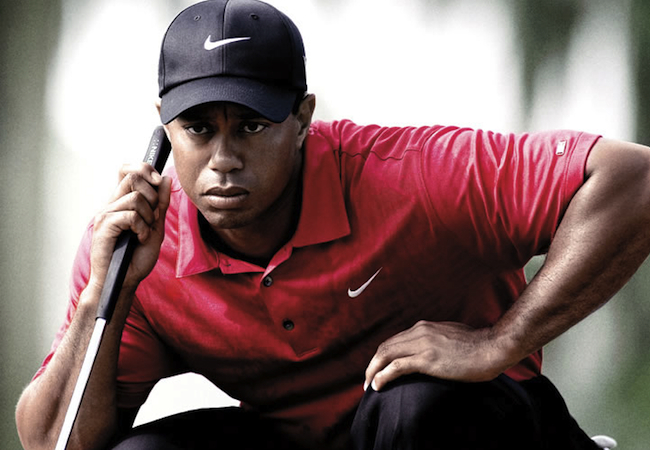
Most people are aware of the insane amount of money the top PGA Tour professionals make every year. What most people also think is that the golf industry is a very unreliable profession, and that you can go from rich to nothing in a matter of a year if your play starts to slander. Although this is true for a majority of all golfers, there are a select few who, if they stopped playing golf all together, could still live life as multi-millionaires. How? One word: endorsements. One prime example is Tiger Woods. The golf phenomenon has only made $600,000 in the last year from actually playing golf (darn), “And yet, despite his current lack of game, nothing seems to prevent the 14-time Major champion from raking in the big bucks. In the last year, Tiger has brought in added $50 million to his purse in endorsement money alone. Nike still keeps Woods living large, to the tune of over $20 million a year.” So basically, Tiger made $50.6 million in 2015, and 98.8% of it came from endorsements. Even if he had not touched a golf club, he still would’ve lived smoothly at $50 million. But regardless, his title is still a ‘professional golfer’. Sounds to me like it should be ‘professional sponsor’, but what do I know?
It seems like the moral of the story is that if your talent throws you into the pool of top golfers in the world for even just a couple of years, you will be financially blessed for the rest of your life. This however, is not always the case. Geoff Ogilvy, a PGA Tour veteran who has won a U.S. Open and three World Golf Championships, has had a mediocre stretch of play in the last couple of years, and it has resulted in him having to contemplate using his Career Money Exemption. Players that are in the top 50 on the PGA Tour’s career money list have the option to use that as an exemption to allow them to stay on the PGA Tour when their play isn’t quite cutting it anymore. It’s an interesting situation, because Geoff has won some of the most prestigious tournaments in the game of golf, but unlike Tiger Woods, that hasn’t done him all that much justice. This leads me to believe that there are other factors to becoming a ‘professional sponsor’.
So, you might ask, what are those factors? The fact of the matter is, Tiger Woods dominated the game for over a decade, while players like Geoff had their winnings in a hot streak of maybe a year or two. These top players like Tiger, Mickelson, McIlroy, etc. have each been consistently playing well for a number of years, constantly pushing their name in the faces of golf fans everywhere. This realization from companies leads them to offer sponsorships, which is eventually how they are able to make so much money even when not playing golf, because they have established themselves as public figures and true celebrities instead of just professional golfers. When players like Geoff Ogilvy have a short period of success, and big companies don’t see any consistency in their popularity, they won’t waste their time knowing that they won’t stay popular for long. This is one of the main reasons that it is so difficult to make a true living out of a golf career, because in order to do so you have to consistently dominate the world of golf for a number of years to fully experience the luxury of those like Tiger Woods.
That being said, being an under-the-radar player on the PGA-Tour is still a good spot to be in. Although players like Geoff Ogilvy are starting to falter in terms of their income, they still have perks like the Career Money Exemption, and they still have great advantages from winning even just one or two tournaments. This leads me into my next topic regarding how skill is more important in development tours than it is on the PGA-Tour.

You did a great job analyzing the information and putting in your own opinion, but you could work on connecting the information a bit back more into the economics of it. Try to talk about the trade off of the situation, such as your economic principle points to.
ReplyDelete